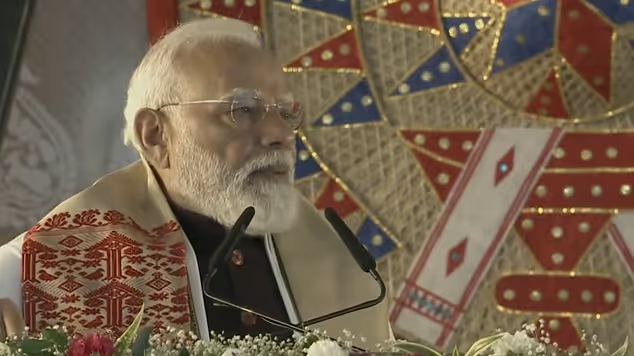

Prime Minister Narendra Modi announced on January 18 that no rhinoceros has been poached at Kaziranga National Park in 2025, crediting this achievement to the focused conservation efforts of the BJP government. Speaking at an event in Assam during the Bhoomi Pujan ceremony for the Kaziranga Elevated Corridor Project, Modi reflected on the rampant poaching incidents that occurred around 2013 and 2014, often reported in quick succession. He emphasized that the government had taken significant steps to eradicate these practices by overhauling conservation strategies and enhancing protective measures.

“When nature is protected, it also creates opportunities,” Modi noted, underscoring the favorable effects of wildlife conservation on local economies. He pointed out that tourism in and around Kaziranga has significantly increased in recent years, providing local communities with benefits from homestays, crafts, small enterprises, and tourism services such as guiding. Modi also commended the Assam government for strengthening wildlife protection and promoting sustainable tourism, stating that these conservation initiatives have fostered economic prospects while preserving the state’s natural heritage.
Kaziranga National Park, a UNESCO World Heritage Site, is internationally recognized for its one-horned rhinoceros population and plays a vital role in Assam’s eco-tourism industry. During the Bhoomi Pujan of the Kaziranga Elevated Corridor Project, which is designed to facilitate safe wildlife movement and improve regional connectivity, Modi highlighted the project’s significance.
The environmentally conscious national highway project, stretching 86 kilometers, includes a 35-kilometer elevated wildlife corridor through Kaziranga, a 21-kilometer bypass, and the widening of 30 kilometers of the existing NH-715 (previously NH-37) from two lanes to four. This initiative aims not only to preserve the park’s rich biodiversity but also to enhance road safety and promote eco-tourism.
Officials reported that the Rs 6,957-crore project is expected to reduce accidents on NH-37 and enhance connectivity between Central and Upper Assam. This will include the four-laning of the Kaliabor–Numaligarh section and a substantial elevated corridor, along with bypasses at Jakhalabandha and Bokakhat.
This project is designed in accordance with Supreme Court directives and the recommendations from the Wildlife Institute of India. It features dedicated spaces beneath the elevated corridor to enable safe animal passage between Kaziranga National Park and the Karbi Anglong Hills, especially during the flood season.