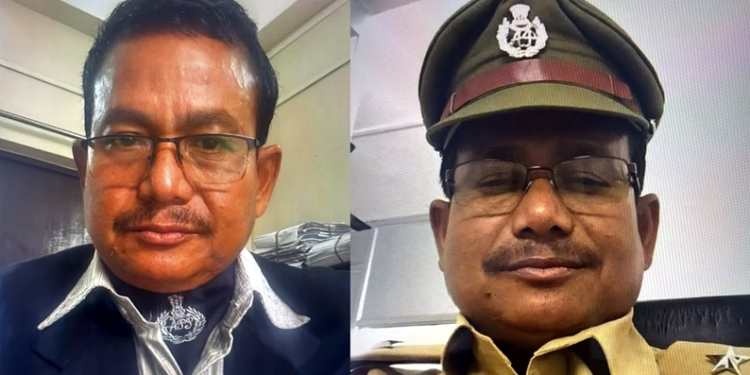
In a shocking revelation that has rocked the administrative corridors of Guwahati, two Assam Civil Service (ACS) officers have found themselves at the center of a sprawling land scam. The recent interrogation of the duo has led to a cascade of explosive details, illuminating the extent of corruption that has plagued the system.

The Guwahati land document fraud came to light with the arrest of two prominent ACS officers. Known for their close associations with a network of lawyers and middlemen, these officers were allegedly involved in a lucrative land documentation forgery racket. Their scheme? To amass wealth by manipulating land records and engaging in illicit property deals.
During the tenure of their respective roles, both officers amassed properties and wealth amounting to over 50 crores, a staggering figure that raises questions about the efficacy of anti-corruption mechanisms within the administrative services.
The ACS officers, who are currently under police custody, have started revealing layers of their misdeeds during their tenure. Lakshyajyoti Das, the ADC from Nagaon, and Deputy Secretary in the Health and Education Department, Lakshyajeet Dowerah, have been disclosing their illicit activities under interrogation.
Das, who once served as a circle officer, is accused of colluding with sub-registrars to acquire properties both under his name and pseudonyms. Now confined in Dispur police station’s lockup, and Dowerah, spending nights in the Panbazar Crime Branch’s cells, are both facing the consequences of their actions.
As the investigation progresses, there is a growing likelihood of more arrests, including other ACS officers, land brokers, and government lawyers, who might have played a part in facilitating or turning a blind eye to these corrupt practices.
The corruption didn’t just stop at one or two instances; it seemed wherever these officers worked, they left a trail of fraudulent transactions, amassing wealth and properties in the process. The police have now uncovered evidence of significant property acquisitions by Das in Dispur, Thelamara, and Khairabari during his time as a revenue circle officer. Similarly, Dowerah, even while serving as an additional commissioner, engaged in comparable corrupt practices.
The land scam involved a sophisticated network of collaborators. Lakshyajyoti Das reportedly sought assistance from sub-registrars and three land brokers identified as Tapas, Habib, and Seemanta to execute his fraudulent schemes. While serving as an ADC in Dispur, Das orchestrated a massive fraud by transferring land belonging to one Sabir Shah to Purnima Bonjang in a clear act of deception.
Lakshyajeet Dowerah’s participation in corruption mirrored Das’s actions. By collaborating with land brokers and middlemen, Dowerah managed to transfer properties to different names without any due diligence.
The infamous case also includes the fraudulent transfer of property belonging to the family of the third president of the Assam Sahitya Sabha, Kaliram Medhi, to one Pradeep Kumar Das. In this case, Guwahati’s Revenue Circle Officer Ratneshwar Das had previously been arrested.
Driven by greed, the two administrative officers allegedly processed numerous land registrations without proper verification, allowing illegal transfers to take place rampantly. This malpractice not only undermines the integrity of the administrative services but also jeopardizes the rightful ownership of properties in the region.
As the interrogation continues to reveal more about the Guwahati land scam, it becomes evident that corruption has deeply infiltrated various levels of the revenue department. With the exposure of these illicit activities, the public’s trust in government services is at stake, and there is a pressing need for systemic reform to prevent such scandals in the future.
The Guwahati land scam serves as a potent reminder of the dangers of unchecked power and greed. It underscores the vital importance of transparency and accountability in public service, as well as the need for vigilant oversight mechanisms to safeguard the public interest.
The unfolding Guwahati land scam saga has not only exposed the individuals involved but also highlighted systemic vulnerabilities that allow such corruption to thrive. It is a wake-up call for authorities to implement stricter controls, enhance monitoring, and ensure that those who abuse their power are held accountable. The people of Assam await justice, and the integrity of the civil services hangs in the balance as this story continues to develop.