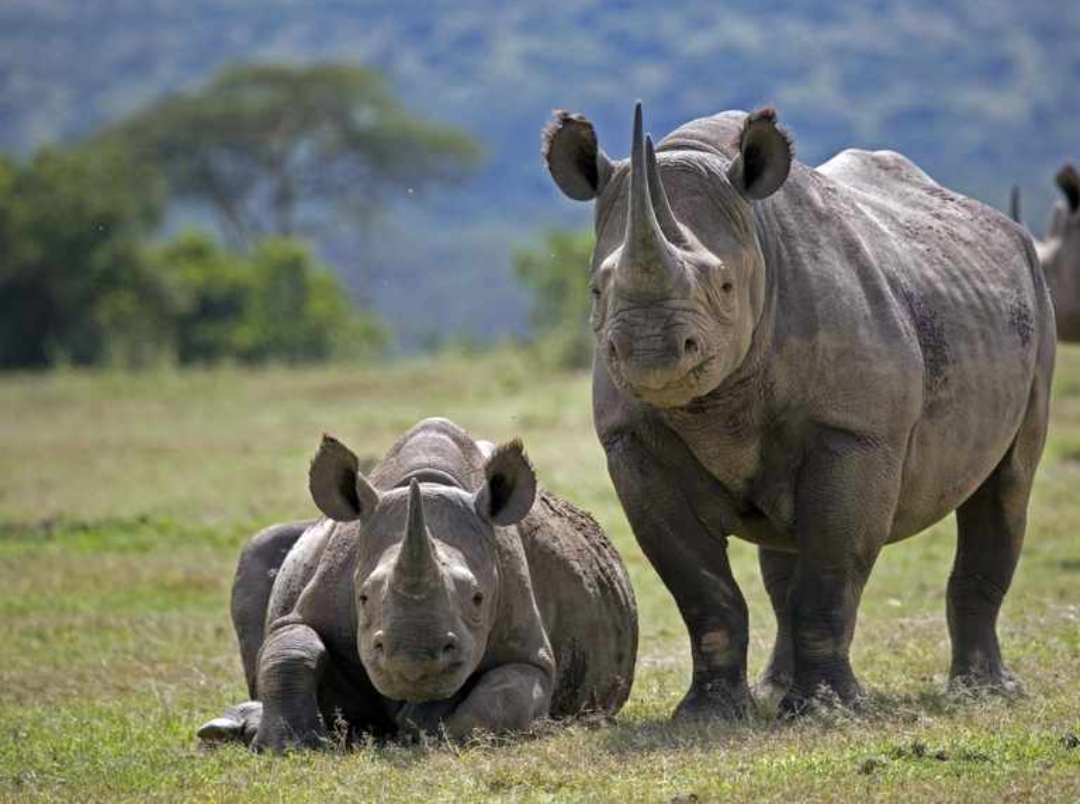
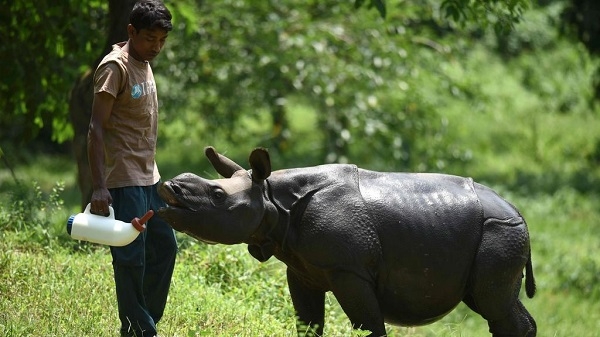
The population of one-horned rhinoceros in the world-famed Kaziranga National Park (KNP) has registered an increase of 200, taking the total animals to 2613, according to a Park official on Tuesday.
 The four-day rhino census recorded 903 females, 750 males and 170 of undetermined sex in the adult category of above six years while in the sub-adult category in the age group of three to six years, 146 females, 116 males and 103 whose sex could not be determined.
KNP Director Jatindra Sarma said that 279 in the juvenile (one to three) years and 146 calf (less than one year) were also recorded.
During the last census conducted in the Park in 2018, 2413 rhinos were recorded.
The rhino population estimation in the Park was conducted from March 25 to 28 though the actual counting was done on March 26 and 27.
On March 25, a training and briefing was imparted to the enumerators by the experts while on March 28 sample survey was conducted in 26 compartments selected randomly and the final computation was done on the same day by a committee set up by the forest department, Sarma said.
Altogether 64 detonators, 12 independent observers and 49 media observers participated in the exercise.
The Park authorities had deployed 50 elephants to cover all 84 compartments of the Park, its addition areas while 252 frontline staff were directly involved in the exercise, Sarma said.
Drone technology was used for sample recheck while binoculars and GPS facilities were provided to the enumerators for better observation.
Rhino census was also conducted in Orang National Park and in Pobitora Wildlife Sanctuary and there was an increase of its population in both the habitats.
In Orang, 125 rhinos were recorded as against 101 in 2018 while in Pobitora 107 animals were counted as against 102 during the previous census.
The other rhino habitat in Assam, Manas National Park had recorded 48 animals in April 2021.
Once critically endangered, rhinos have been upgraded as vulnerable species by IUCN from 2009 and according to the 2022 census, Assam now has 2893 animals with Kaziranga National Park having the highest population.