Raijor Dal chief and Sibsagar MLA Akhil Gogoi has condemned what he described as the “forcible” hospitalisation of climate and social activist Sonam Wangchuk, calling the move a violation of the activist’s fundamental and constitutional rights and demanding Wangchuk’s immediate release as well as the resignation of Union Education Minister Dharmendra Pradhan.
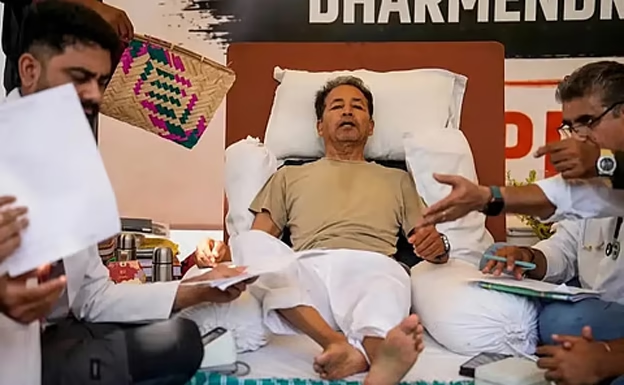
Speaking to reporters, Gogoi said the way Wangchuk was removed from the protest and taken to hospital while on a hunger strike was “deeply concerning” and unacceptable. He framed Wangchuk’s agitation as more than an education-sector protest, saying it represents a broader struggle for the country’s future and future generations.
Delhi Police moved Wangchuk from the Jantar Mantar protest site to Safdarjung Hospital on Saturday. Wangchuk has been on a hunger strike demanding Pradhan’s resignation amid allegations of irregularities in national examinations, including the NEET paper leak controversy.
Meanwhile, the Cockroach Janata Party (CJP) has continued its demonstration at Jantar Mantar and announced a march to Parliament timed for the opening day of the Monsoon Session on Monday. Sources told ANI the group has not yet sought permission from Delhi Police for the proposed march, which Wangchuk had announced before he was taken to hospital. Officials indicated that permission is unlikely because security is being tightened for the parliamentary session.
Delhi Police routinely enforce prohibitory orders under Section 163 of the Bharatiya Nagarik Suraksha Sanhita (BNSS), formerly Section 144 of the CrPC, across the New Delhi district during Parliament sittings-especially near Parliament House and India Gate. The police action in Wangchuk’s case has drawn criticism from several Opposition leaders, including AAP national convenor Arvind Kejriwal, Congress president Mallikarjun Kharge, Congress leader Pawan Khera, Trinamool Congress chief Mamata Banerjee and leaders of the Samajwadi Party.
The dispute underscores mounting public and political scrutiny over alleged examination irregularities and raises fresh debate about the limits of state action during protests and the rights of hunger-striking demonstrators.