As the technological landscape continues to evolve, consumers and enterprises alike are bombarded by a myriad of acronyms and terms that can often confuse rather than clarify. High Dynamic Range (HDR) formats such as HDR10, HDR10+, and Dolby Vision are at the forefront of the latest television technology, reshaping the viewer’s experience. Understanding these differences is crucial, not just for consumers but also for businesses that leverage media technology.
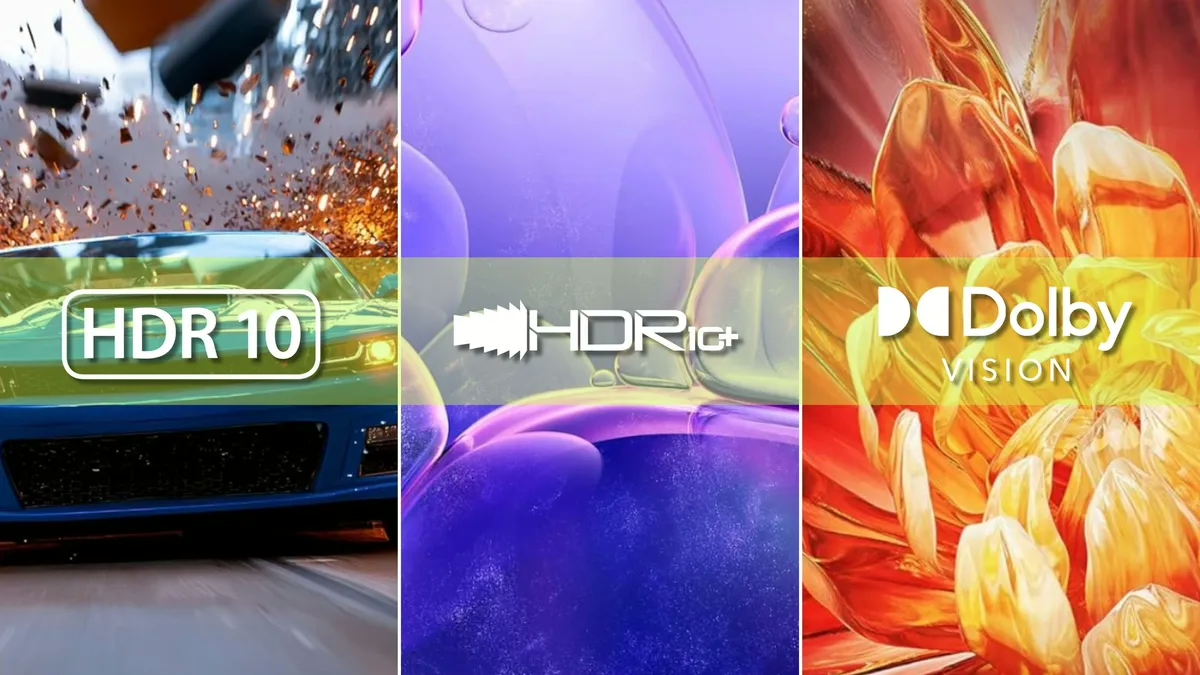
Recent insights from ZDNet outlined the distinctions between these HDR formats. At its core, HDR10 serves as the baseline HDR standard, employing static metadata that dictates brightness and color for an entire film or show. This approach, while functional, can lead to suboptimal viewing experiences, particularly in scenes with dramatic shifts in light and dark. In contrast, HDR10+ and Dolby Vision utilize dynamic metadata, allowing for real-time adjustments and substantially enhancing the viewing experience.
Moreover, both HDR10+ and Dolby Vision are increasingly supported across major streaming platforms, highlighting the industry-wide shift towards dynamic content consumption. The key takeaway for enterprises is that HDR technology is not merely an incremental update; it represents a paradigmatic shift in how visual content is rendered and experienced.
Contextual Overview
To distill the nuances of HDR technology, let’s focus on the fundamental principle of metadata usage. The static approach of HDR10 restricts flexibility and adaptability. Conversely, HDR10+ and Dolby Vision promise more visually refined outputs, providing a significant competitive edge in enhancing user engagement through superior image quality.
What This Means for Enterprises
From an enterprise architecture perspective, the strategic implications are profound. The push towards integrating HDR technology requires organizations to assess their current media capabilities, particularly if they are in sectors where visual acuity plays a pivotal role, such as entertainment, advertising, and education.
- Build vs. Buy Considerations: Companies must evaluate whether to develop in-house solutions or adopt existing technologies. Investing in HDR-capable systems can enhance brand positioning, but it requires a thorough cost analysis.
- User Experience: Improved visual quality can lead to better customer engagement, driving not only sales but also brand loyalty. Organizations should consider user personas to tailor their offerings effectively.
- Legacy Integration: Many businesses still operate on older systems that may not fully support newer HDR formats, an obstacle that could hinder their capacity to stay competitive in a fast-evolving market. Legacy modernization should also be a top priority to ensure compatibility with the latest HDR technology.
A Broader Perspective for the Indian Context
In India, particularly in Northeast regions where internet bandwidth poses challenges, the growth of streaming services adopting HDR technology is both an opportunity and a hurdle. Companies venturing into this space must prioritize optimizing content delivery for lower bandwidth conditions while still improving visual quality-a strategy that aligns with the broader imperative of Digital Public Infrastructure (DPI).
For example, as streaming platforms gain traction, local businesses can explore partnerships to deliver HDR content tailored for Indian audiences, addressing regional content preferences, and maximizing reach through innovative distribution strategies.
Key Takeaways
- Understanding HDR technology is essential for enterprises pursuing advanced visual content delivery.
- Dynamic metadata formats (HDR10+ and Dolby Vision) provide a superior viewer experience and should be part of future media strategies.
- Assess technological alignment with customer engagement goals to leverage content differentiation effectively.
In closing, as the landscape of video technology continues to evolve, so must our strategic planning and architectural frameworks to remain competitive. Embracing these advances offers significant opportunities to refine customer experiences and drive innovation across industries.